
The Limitations of Knife Disarming Techniques and why knife mitigation training is key
In self-defence, realistic and practical training methods are crucial, particularly in knife defence. My teaching experience has led me to prioritize knife mitigation strategies over high-skill, low-success-rate disarm tactics. The dangers and unrealistic expectations tied to knife disarming highlight the need for skills that boost awareness and risk avoidance.
Knife disarming techniques, often showcased in martial arts demonstrations, assume a compliant opponent and are practiced at reduced speeds in controlled settings. This gap between training and real-life scenarios can create a false sense of confidence. Students might believe they can perform complex maneuvers during the chaos of an actual attack. In reality, knife attacks are unpredictable and fast, making rehearsed disarm techniques nearly impossible to execute effectively.
The Influence of Hollywood
Many students and instructors fall prey to exaggerated portrayals of combat in Hollywood films, leading to what I term “Jason Bourne/John Wick syndrome.” This mindset convinces individuals they can perform extraordinary feats under pressure, which is rarely true. Such misconceptions detract from practical training and reinforce the dangerous belief that complex disarming techniques can be achieved in real situations.
The Rise of Longer Blades
The increasing use of longer blades in the UK, such as kitchen knives and machetes, complicates knife defence further. This trend raises the stakes considerably, making successful disarms highly unlikely. Additionally, the popularity of “zombie knives,” designed for intimidation rather than utility, adds another layer of concern. The reach and force of these weapons severely lower the chances of physically disarming an attacker, highlighting the need for focus on avoidance and mitigation.
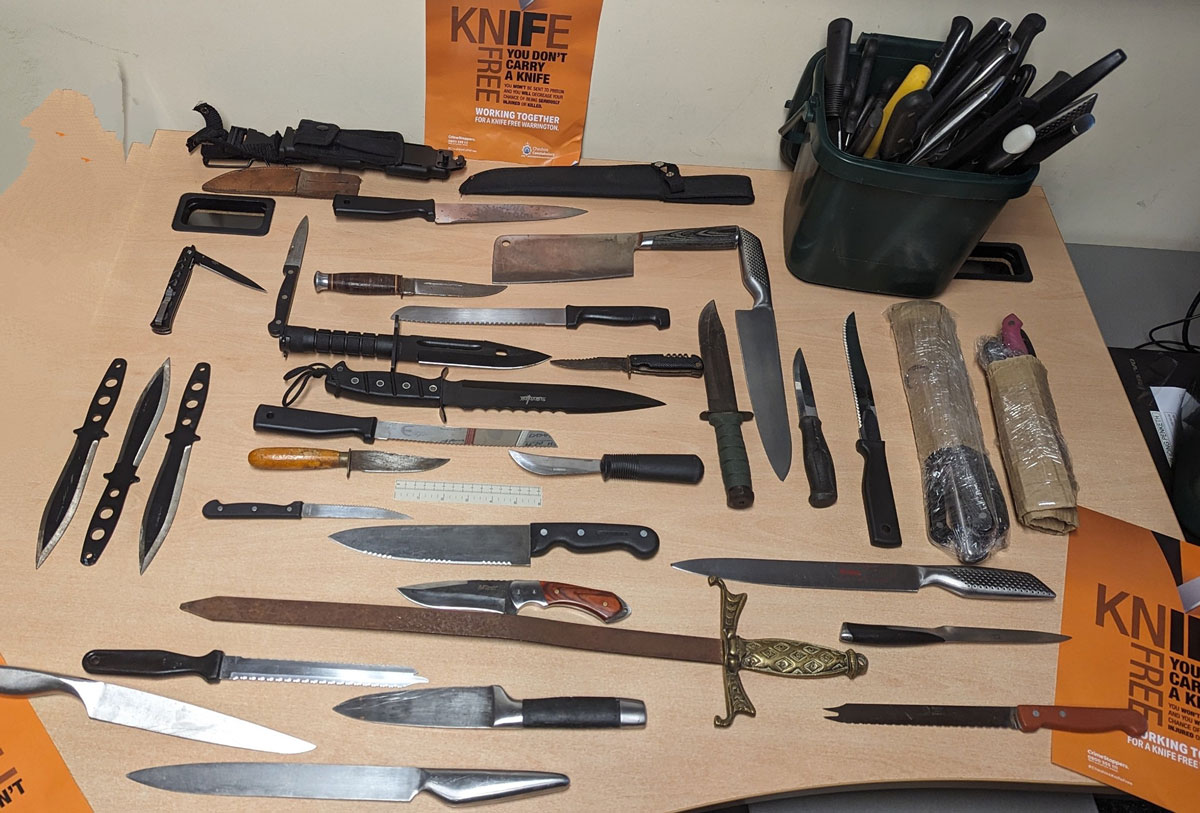
Image taken from Cheshire Police website
The Challenge of Multiple Assailants
Knife attacks often involve multiple assailants, complicating the situation even more. Facing one attacker is challenging, but multiple threats make successful disarmament even less likely. This reinforces the importance of focusing on mitigation rather than disarmament. In such scenarios, injury risk increases, making escape and avoidance the top priorities.
Utilizing Everyday Objects for Self-DefenCe
In the UK, where civilians can’t carry weapons for self-defence, using everyday objects becomes essential. Common items can effectively serve as barriers or tools during knife encounters. For example, a sturdy bag can absorb initial attacks, allowing time to escape. Likewise, items like torches (flashlights) can serve as deterrents when directed at an attacker’s eyes, providing a critical chance to flee.
Creative Use of Common Objects
Further, objects like newspapers and magazines can be rolled into makeshift batons, offering additional reach and leverage. While not foolproof, they can deter aggressors and make them reconsider their actions when faced with unexpected resistance.
Understanding Stress Response
It’s important to consider how stress affects our response during an attack. Stress training often fails to mimic the genuine fear experienced in a real knife assault. The adrenaline rush, tunnel vision, and loss of fine motor skills can hinder intricate disarming techniques. Feeling fatigued from training is vastly different from managing real fear and panic in a genuine attack.
The Shift Toward Knife Mitigation
Thus, the focus should shift to knife mitigation—teaching individuals to identify threats, maintain safe distances, and use evasive tactics. This approach enhances situational awareness and equips individuals to de-escalate confrontations before they turn violent. By practicing the use of common objects in self-defence scenarios, individuals gain better preparation for real threats without resorting to illegal means.
Conclusion regarding knife mitigation
In conclusion, while knife disarmament may showcase technical skills in controlled environments, it is not practical for real-world situations. By emphasizing knife mitigation and creative use of everyday items, we prioritize awareness, avoidance, and safety. As self-defence educators, we must equip our students with practical tools that enhance their safety and empower them to navigate threats wisely.
Summary: Norwich remains a safe place to live, as most violence involving blades is drug-related. Choose your circles wisely, if you are worried about knife crime. And finally choose a self defence system that works 😉